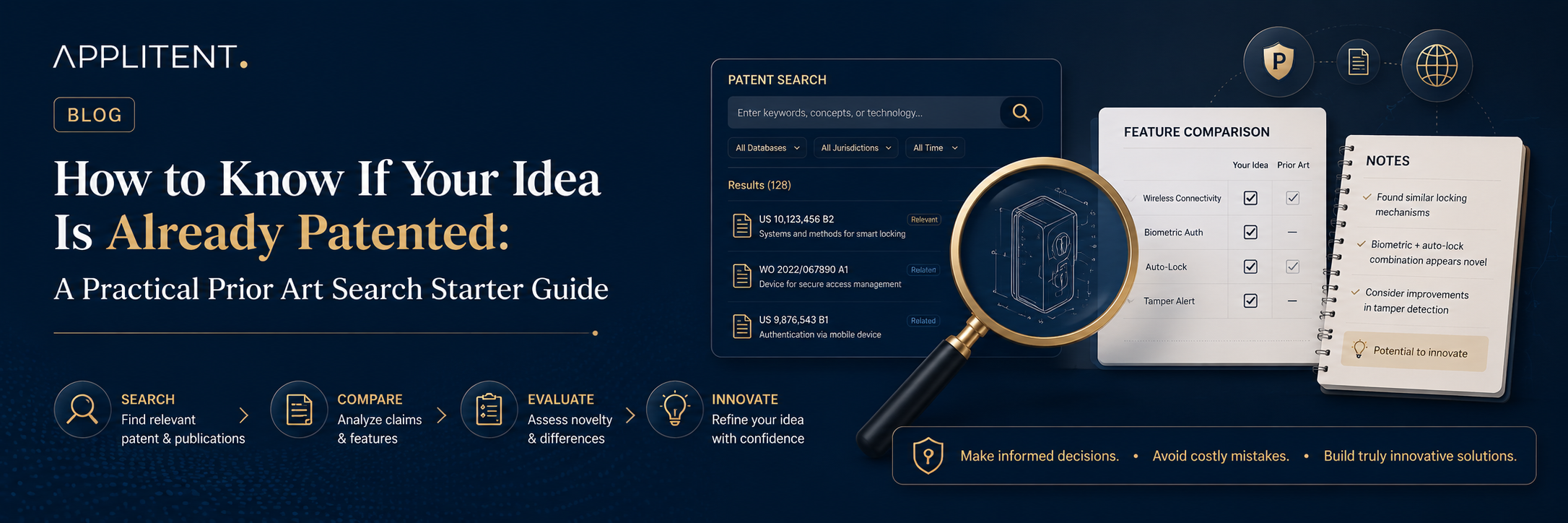
A first-pass prior art search guide for inventors using USPTO and WIPO tools responsibly without treating search results as proof of patentability.
“I found nothing” does not mean “it is new”
This section gives practical preparation guidance, highlights documents to collect, and explains limits to avoid overclaiming or relying on assumptions. Keep records exact, verify official requirements where relevant, and use qualified professional advice for legal conclusions or jurisdiction-specific decisions.
- Collect exact records before making decisions.
- Separate facts from assumptions.
- Note open questions for professional review.
- Keep confidential technical details controlled until the right review path is chosen.
Patents vs broader prior art
This section gives practical preparation guidance, highlights documents to collect, and explains limits to avoid overclaiming or relying on assumptions. Keep records exact, verify official requirements where relevant, and use qualified professional advice for legal conclusions or jurisdiction-specific decisions.
- Collect exact records before making decisions.
- Separate facts from assumptions.
- Note open questions for professional review.
- Keep confidential technical details controlled until the right review path is chosen.
Define the invention by function
This section gives practical preparation guidance, highlights documents to collect, and explains limits to avoid overclaiming or relying on assumptions. Keep records exact, verify official requirements where relevant, and use qualified professional advice for legal conclusions or jurisdiction-specific decisions.
- Collect exact records before making decisions.
- Separate facts from assumptions.
- Note open questions for professional review.
- Keep confidential technical details controlled until the right review path is chosen.
Break invention into features
This section gives practical preparation guidance, highlights documents to collect, and explains limits to avoid overclaiming or relying on assumptions. Keep records exact, verify official requirements where relevant, and use qualified professional advice for legal conclusions or jurisdiction-specific decisions.
- Collect exact records before making decisions.
- Separate facts from assumptions.
- Note open questions for professional review.
- Keep confidential technical details controlled until the right review path is chosen.
Generate synonyms
This section gives practical preparation guidance, highlights documents to collect, and explains limits to avoid overclaiming or relying on assumptions. Keep records exact, verify official requirements where relevant, and use qualified professional advice for legal conclusions or jurisdiction-specific decisions.
- Collect exact records before making decisions.
- Separate facts from assumptions.
- Note open questions for professional review.
- Keep confidential technical details controlled until the right review path is chosen.
Search combinations
This section gives practical preparation guidance, highlights documents to collect, and explains limits to avoid overclaiming or relying on assumptions. Keep records exact, verify official requirements where relevant, and use qualified professional advice for legal conclusions or jurisdiction-specific decisions.
- Collect exact records before making decisions.
- Separate facts from assumptions.
- Note open questions for professional review.
- Keep confidential technical details controlled until the right review path is chosen.
Search classifications where possible
This section gives practical preparation guidance, highlights documents to collect, and explains limits to avoid overclaiming or relying on assumptions. Keep records exact, verify official requirements where relevant, and use qualified professional advice for legal conclusions or jurisdiction-specific decisions.
- Collect exact records before making decisions.
- Separate facts from assumptions.
- Note open questions for professional review.
- Keep confidential technical details controlled until the right review path is chosen.
Search inventors/assignees
This section gives practical preparation guidance, highlights documents to collect, and explains limits to avoid overclaiming or relying on assumptions. Keep records exact, verify official requirements where relevant, and use qualified professional advice for legal conclusions or jurisdiction-specific decisions.
- Collect exact records before making decisions.
- Separate facts from assumptions.
- Note open questions for professional review.
- Keep confidential technical details controlled until the right review path is chosen.
Follow citations and patent families
This section gives practical preparation guidance, highlights documents to collect, and explains limits to avoid overclaiming or relying on assumptions. Keep records exact, verify official requirements where relevant, and use qualified professional advice for legal conclusions or jurisdiction-specific decisions.
- Collect exact records before making decisions.
- Separate facts from assumptions.
- Note open questions for professional review.
- Keep confidential technical details controlled until the right review path is chosen.
Read claims, abstracts, drawings, and descriptions differently
This section gives practical preparation guidance, highlights documents to collect, and explains limits to avoid overclaiming or relying on assumptions. Keep records exact, verify official requirements where relevant, and use qualified professional advice for legal conclusions or jurisdiction-specific decisions.
- Collect exact records before making decisions.
- Separate facts from assumptions.
- Note open questions for professional review.
- Keep confidential technical details controlled until the right review path is chosen.
Use official tools: USPTO patent search resources and WIPO PATENTSCOPE
This section gives practical preparation guidance, highlights documents to collect, and explains limits to avoid overclaiming or relying on assumptions. Keep records exact, verify official requirements where relevant, and use qualified professional advice for legal conclusions or jurisdiction-specific decisions.
- Collect exact records before making decisions.
- Separate facts from assumptions.
- Note open questions for professional review.
- Keep confidential technical details controlled until the right review path is chosen.
Search non-patent literature
This section gives practical preparation guidance, highlights documents to collect, and explains limits to avoid overclaiming or relying on assumptions. Keep records exact, verify official requirements where relevant, and use qualified professional advice for legal conclusions or jurisdiction-specific decisions.
- Collect exact records before making decisions.
- Separate facts from assumptions.
- Note open questions for professional review.
- Keep confidential technical details controlled until the right review path is chosen.
Build a comparison table
This section gives practical preparation guidance, highlights documents to collect, and explains limits to avoid overclaiming or relying on assumptions. Keep records exact, verify official requirements where relevant, and use qualified professional advice for legal conclusions or jurisdiction-specific decisions.
- Collect exact records before making decisions.
- Separate facts from assumptions.
- Note open questions for professional review.
- Keep confidential technical details controlled until the right review path is chosen.
Distinguish patentability search, freedom-to-operate analysis, and validity analysis
This section gives practical preparation guidance, highlights documents to collect, and explains limits to avoid overclaiming or relying on assumptions. Keep records exact, verify official requirements where relevant, and use qualified professional advice for legal conclusions or jurisdiction-specific decisions.
- Collect exact records before making decisions.
- Separate facts from assumptions.
- Note open questions for professional review.
- Keep confidential technical details controlled until the right review path is chosen.
Common search mistakes
This section gives practical preparation guidance, highlights documents to collect, and explains limits to avoid overclaiming or relying on assumptions. Keep records exact, verify official requirements where relevant, and use qualified professional advice for legal conclusions or jurisdiction-specific decisions.
- Collect exact records before making decisions.
- Separate facts from assumptions.
- Note open questions for professional review.
- Keep confidential technical details controlled until the right review path is chosen.
When professional search/legal review is appropriate
This section gives practical preparation guidance, highlights documents to collect, and explains limits to avoid overclaiming or relying on assumptions. Keep records exact, verify official requirements where relevant, and use qualified professional advice for legal conclusions or jurisdiction-specific decisions.
- Collect exact records before making decisions.
- Separate facts from assumptions.
- Note open questions for professional review.
- Keep confidential technical details controlled until the right review path is chosen.
First-pass search worksheet/checklist
This section gives practical preparation guidance, highlights documents to collect, and explains limits to avoid overclaiming or relying on assumptions. Keep records exact, verify official requirements where relevant, and use qualified professional advice for legal conclusions or jurisdiction-specific decisions.
- Collect exact records before making decisions.
- Separate facts from assumptions.
- Note open questions for professional review.
- Keep confidential technical details controlled until the right review path is chosen.
Official sources and further reading
Use official resources such as WIPO PCT FAQs, PCT Rule 49, USPTO patent search resources, and WIPO PATENTSCOPE where relevant. This article is general information only and does not guarantee patentability, filing success, buyers, visas, investment, or commercial outcomes.
- Collect exact records before making decisions.
- Separate facts from assumptions.
- Note open questions for professional review.
- Keep confidential technical details controlled until the right review path is chosen.
Related Applitent resources: patentability guide, patent description preparation, public sharing guide, and free consultation.